
Thank you for the support, this blog post got featured on the front page of Hacker News (YCombinator).
As an Emacs user, few things are as delightful as catching my favorite text editor out in the wild. It doesn’t happen often though – Emacs is niche, and pop culture rarely gives it a nod. This post tracks down every one I know of (as of June 2026), and I’ll keep adding to it as I stumble across more. The main list covers on-screen sightings (movies, TV series) along with comics and manga. Textual references in books are collected separately under “Honorable mentions”.
Here you go, in no particular order:
2010 Movie, The Social Network
The Social Network is a biographical drama film portraying the founding of Facebook.
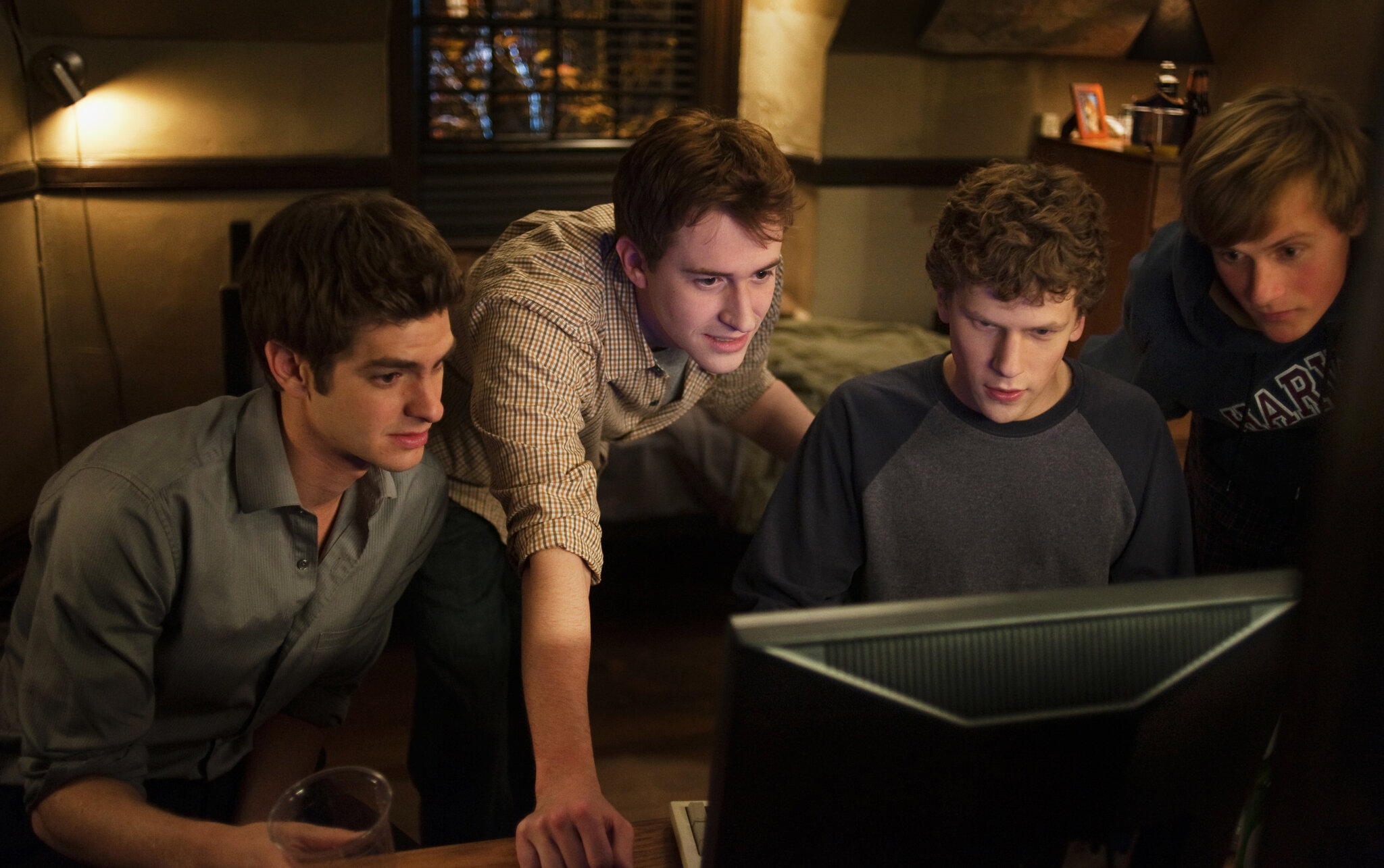 The Social Network (2010)
In the scene where young Zuckerberg (played by Jesse Eisenberg) is putting together Facemash by scraping pictures from all the Harvard Houses (campus dorms), he fires up Emacs and writes a Perl script to crawl the website of Leverett House.
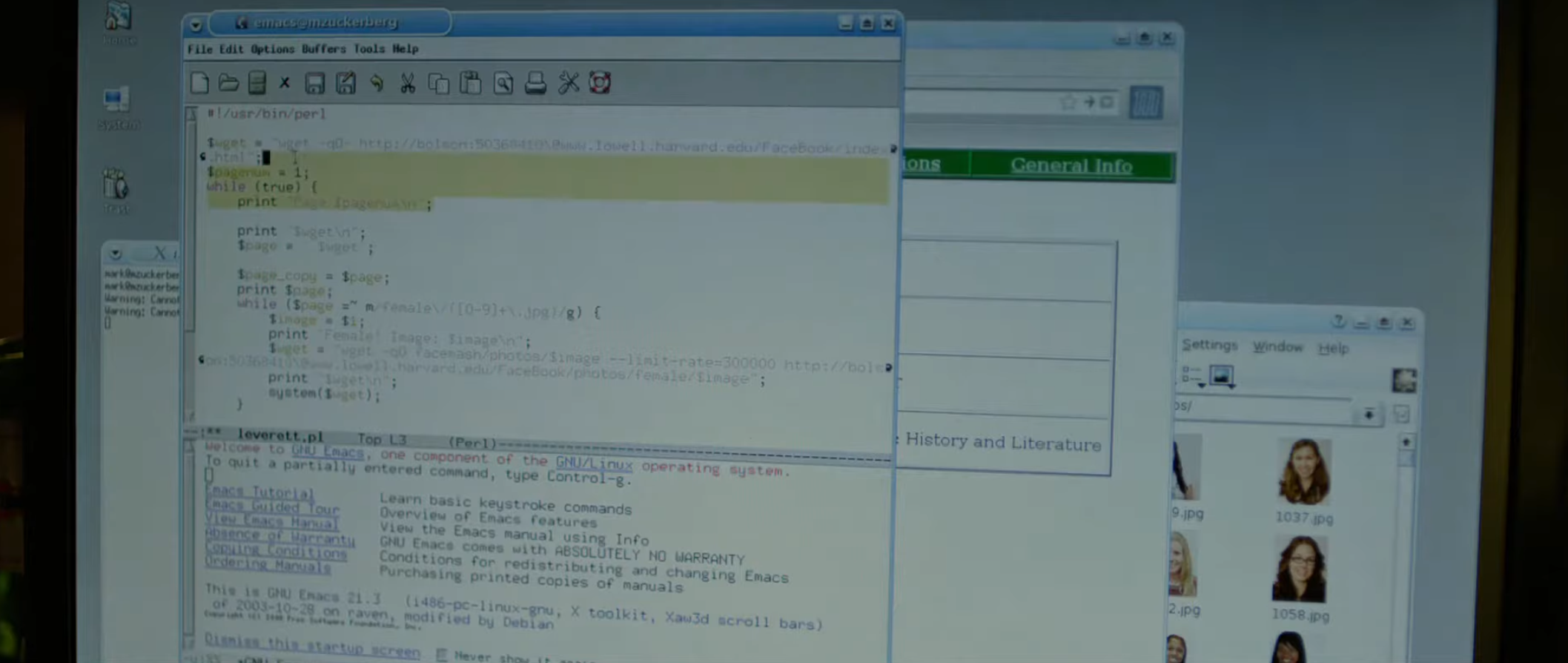 Movie scene where Zuckerberg is shown scripting Perl on Emacs in his Harvard dorm room
As the movie scene plays, Zuckerberg narrates, “… and there’s no way I’m gonna go through 500 pages to download pics one at a time. So it’s definitely necessary to break out Emacs and modify that Perl script.”
2010 Movie, Tron: Legacy
The other movie featuring Emacs coincidentally hit theaters the same year, 2010. Tron: Legacy is a well-received sci-fi film and the second installment of the Tron series. The Daft Punk soundtrack was awesome too, to say the least.
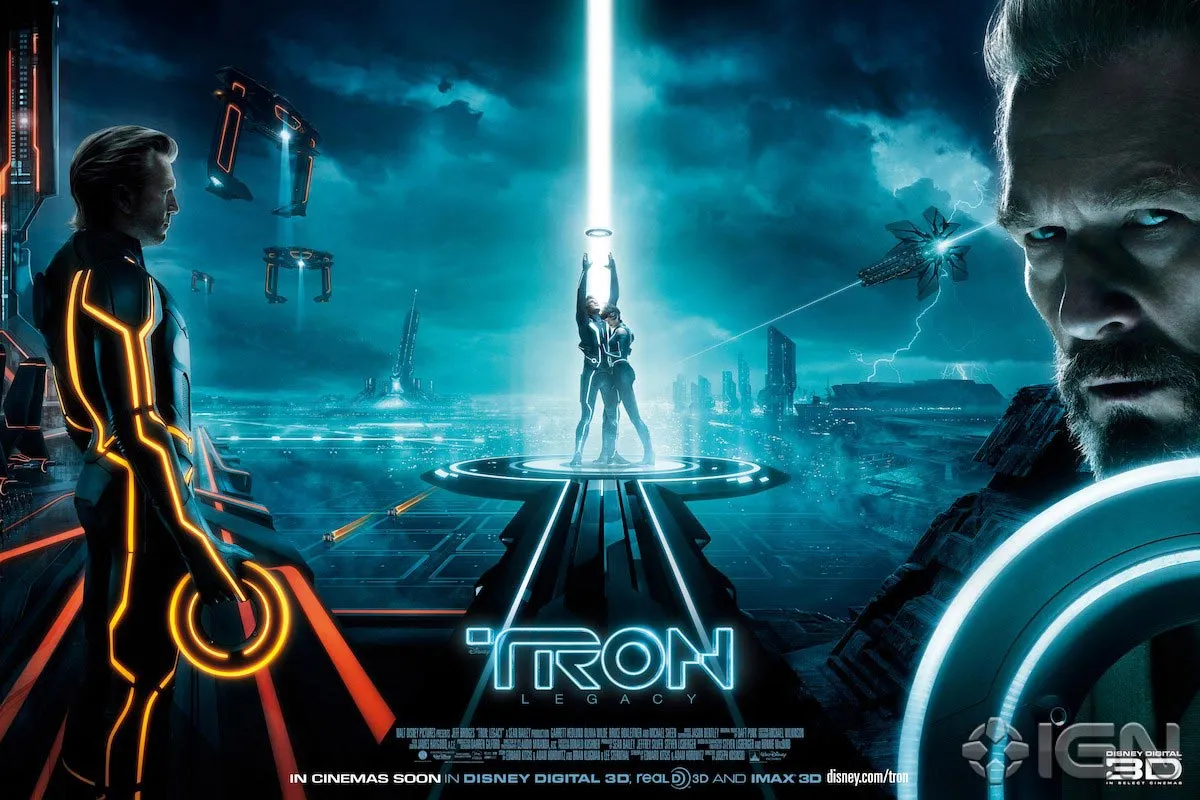 Tron: Legacy (2010)
In one of the opening scenes, Edward Dillinger Jr. (played by Cillian Murphy) fires up Emacs’ eshell to grep and kill the system process that protagonist Sam Flynn initiated to attack ENCOM’s new OS 12.
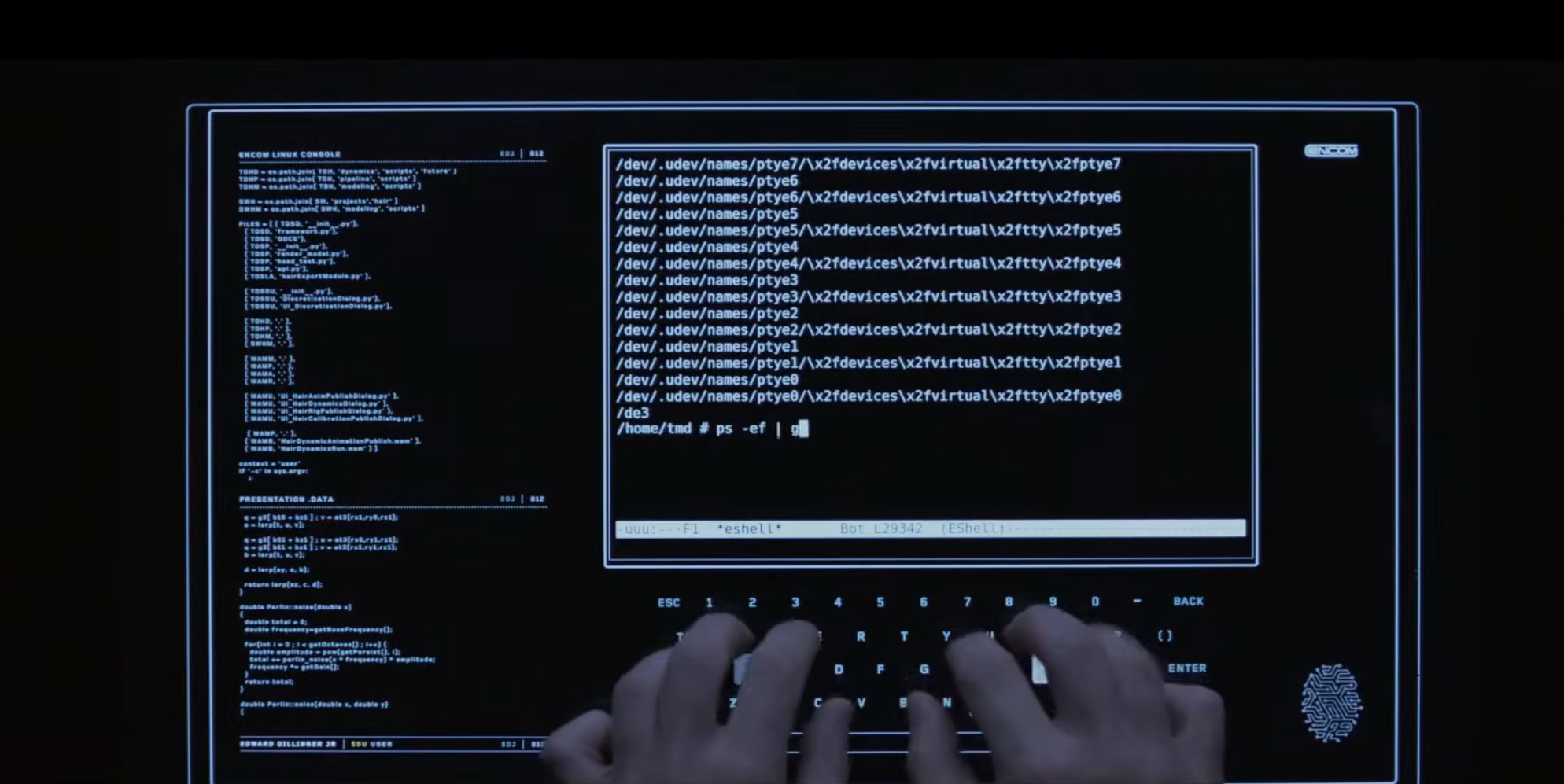 Emacs’ eshell used to grep and kill Flynn’s hacking program
P.S. Inspired by this movie scene, I created an Emacs color theme based on the color palette of Tron: Legacy. Check it out at https://github.com/ianyepan/tron-legacy-emacs-theme. My repo passed 200 GitHub stars not too long ago. I suppose I made quite a few people happy.
2010 Movie, Arctic Blast
Another 2010 film – this time, a sci-fi disaster movie jointly produced between Australia and Canada. At around the 20:30 timestamp, two scientists, Jack and Zoe, attempt to recover some satellite photos from a frozen hard drive. We see a scrolling wall of Emacs Lisp on their computer for a brief moment as Jack disappointedly said that most of the files are corrupted.
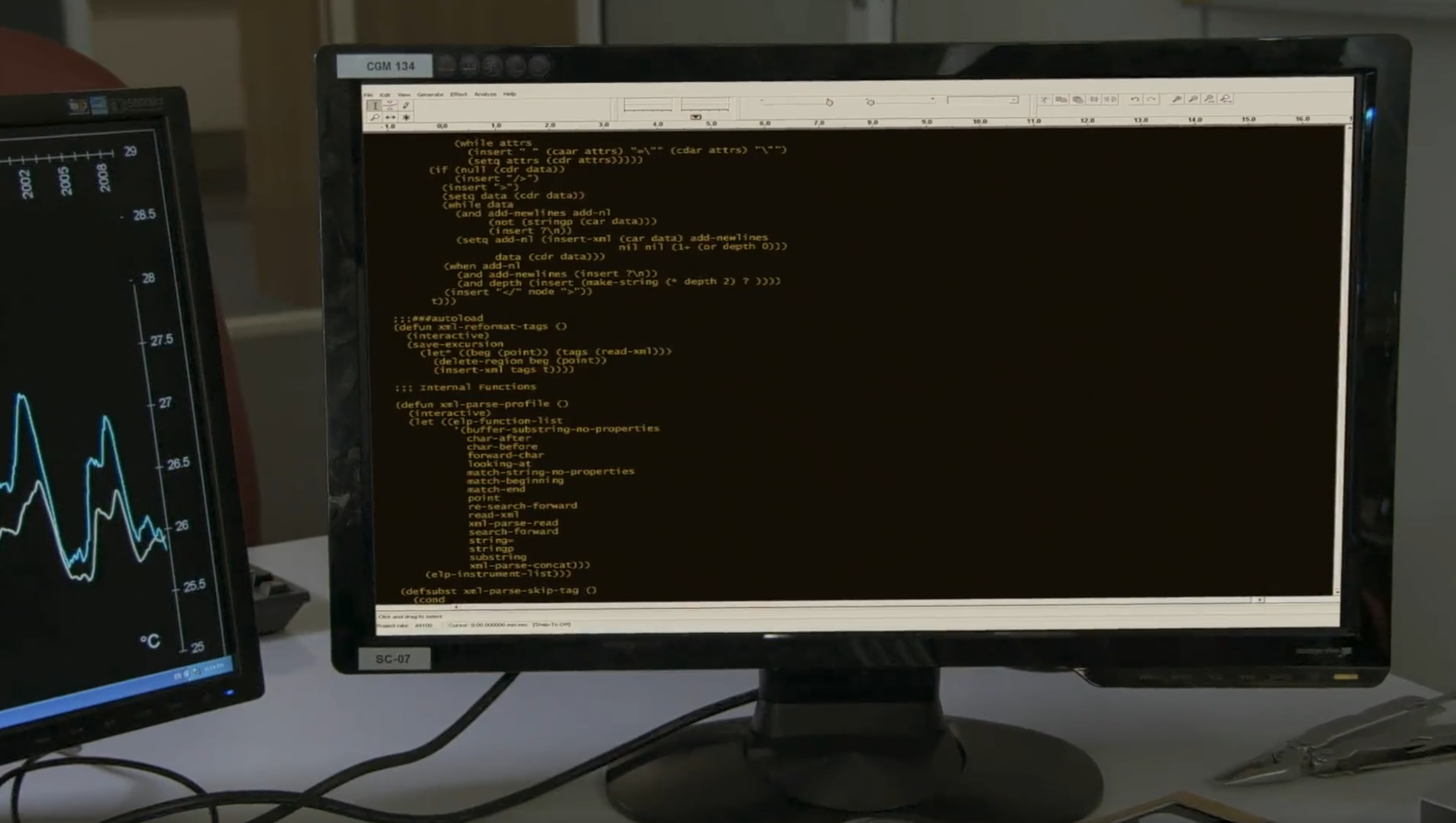 Two scientists using Emacs Lisp to recover data from a hard drive
;;;###autoload, interactive, and save-excursion are all unmistakably Emacs Lisp syntax. The Elisp program shown on screen is in fact the xml-parse module source code, authored by John Wiegley back in 2001.
2014-2019 HBO, Silicon Valley
Silicon Valley is one of my favorite shows (my all-time favorite is still Mr. Robot). It’s a comedy series parodying tech-industry culture, and it packs a surprising amount of insight into the software engineer lifestyle, the dynamics of VC funding, and the underdog startup’s fight against the big corporations.
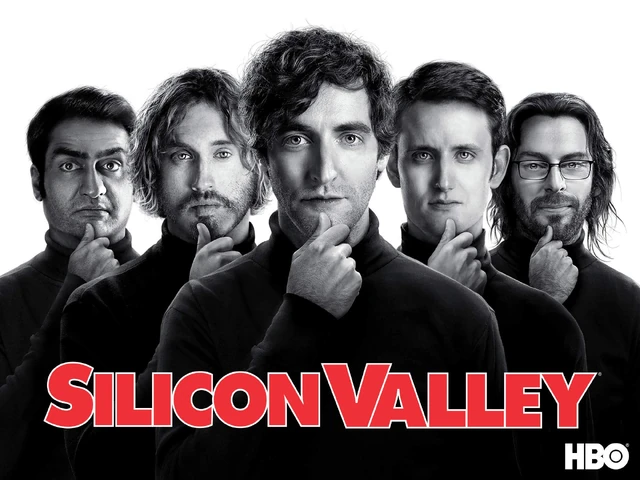 Silicon Valley (2014-2019)
In a scene (Season 3, Episode 6) where protagonist Richard is coding with his new girlfriend Winnie at her apartment (okay, yeah… that’s not how all software engineers date, whatever the outside world may think), the two clash over the use of spaces versus tabs. Richard, a stubborn advocate of the tab character for indentation, argues: “I mean I do not get why anyone would use spaces over tabs. I mean, why not just use Vim over Emacs?” To which Winnie replies, “I do use Vim over Emacs.” Richard then breaks down, yelling, “Oh, God help us!”
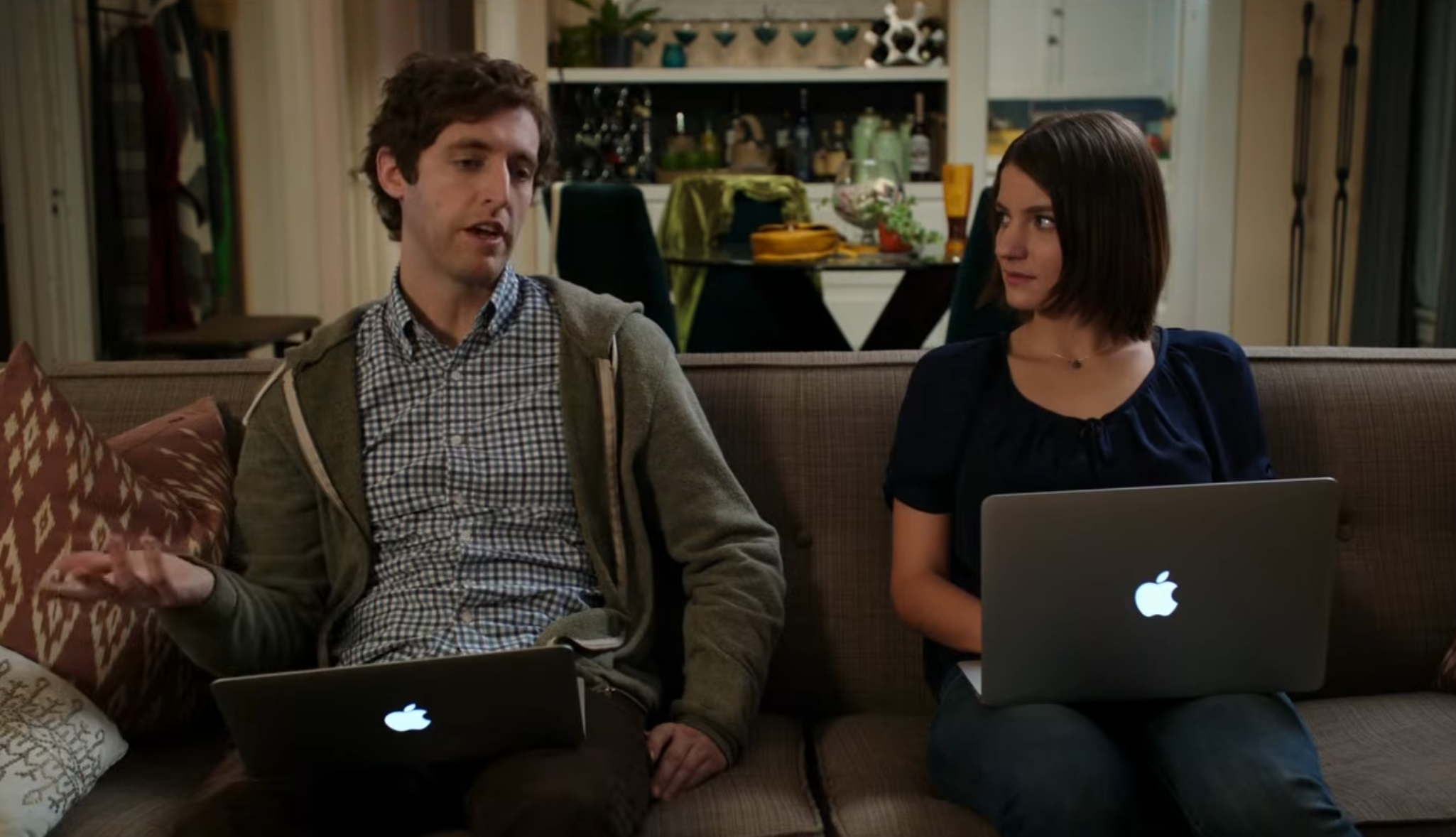 Richard argues with Winnie over indentation style and choice of editor
Genius scene by HBO, sneaking in a brief reference to the editor war in the middle of a fight over indentation style. Not so genius for our poor Richard.
This scene is particularly important to me. It was, in fact, my very first exposure to both Vim and Emacs. I remember sitting in my university library that one evening ~10 years ago, taking a break from studying to watch this episode, and thinking to myself, “What are Vim and Emacs?” I looked them up, learned that all the 10x developers seemed to swear by one or the other, and decided I would pick up Vim first. After a year with Vim, I switched to Emacs with Evil-mode full-time – and here I am, writing this blog post in Emacs on a Sunday night. And first thing tomorrow at work? Probably fire up Emacs to review some pull requests : -)
Thank you ‘neonnoodle’ on Hacker News for suggesting the following entry.
In Season 4, Episode 2, during a scene where the Pied Piper team is brainstorming feature ideas for their product, “Emacs keybindings” appears on a yellow post-it note (near the bottom of the screenshot). Despite the long-running jokes about Emacs’s finger-twisting chords, those bindings are everywhere: they’re the default line-editing mode in shells like bash and zsh, and macOS honors many of them (C-a, C-e, C-k) system-wide in any text field.
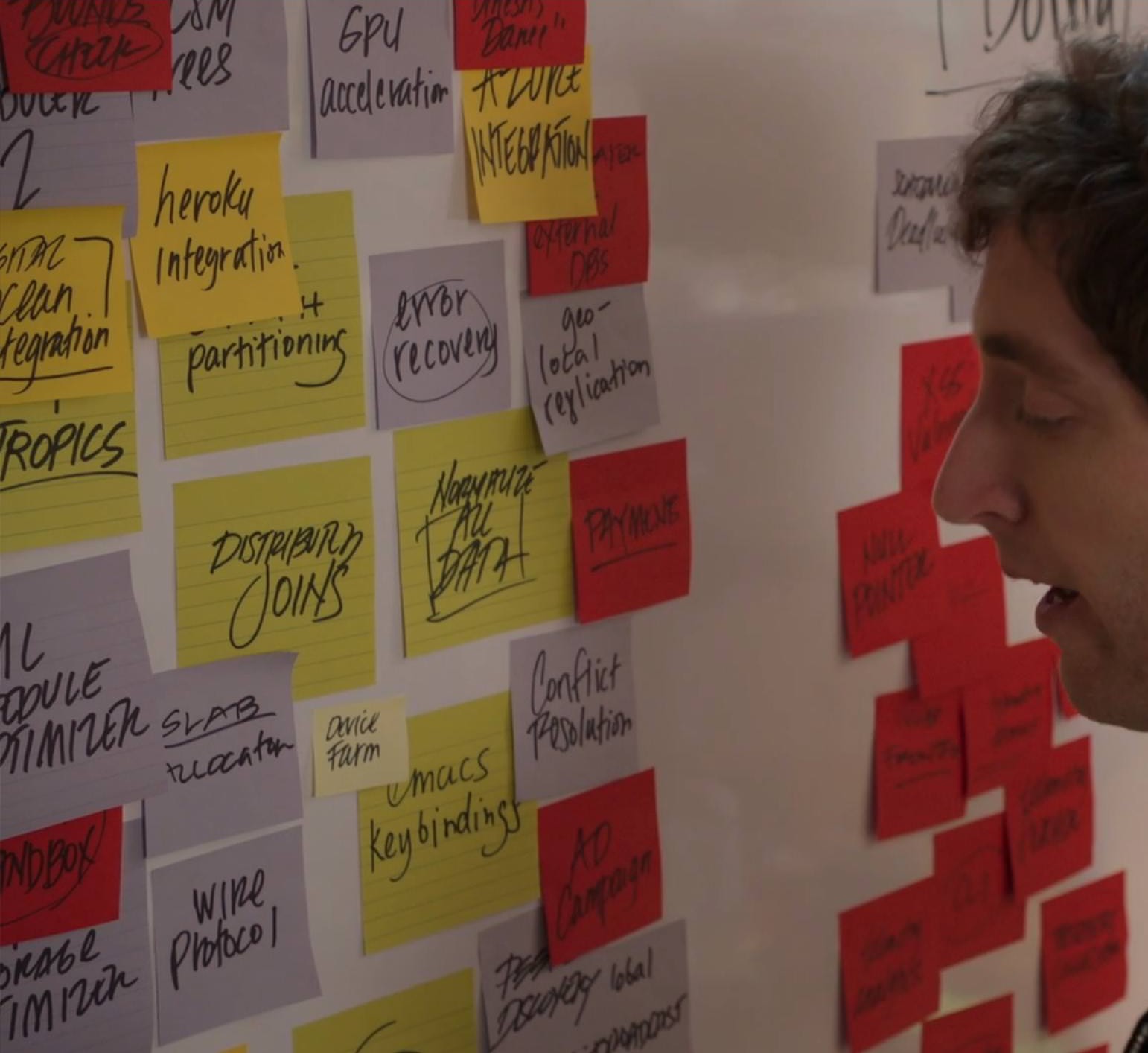 The team (or more likely just Richard) is thinking of adding Emacs keybindings to their product.
1992-1993 DC Comics, The Hacker Files
The Hacker Files is a twelve-issue DC comics mini-series about a freelance hacker exposing a multinational conspiracy and taking down an evil corporation. It’s a pretty good read!
In the first issue, protagonist Jack Marshall uses Emacs to edit a source file to fight a computer virus. The comic doesn’t show the text editor’s user interface, just the command emacs cure.c.
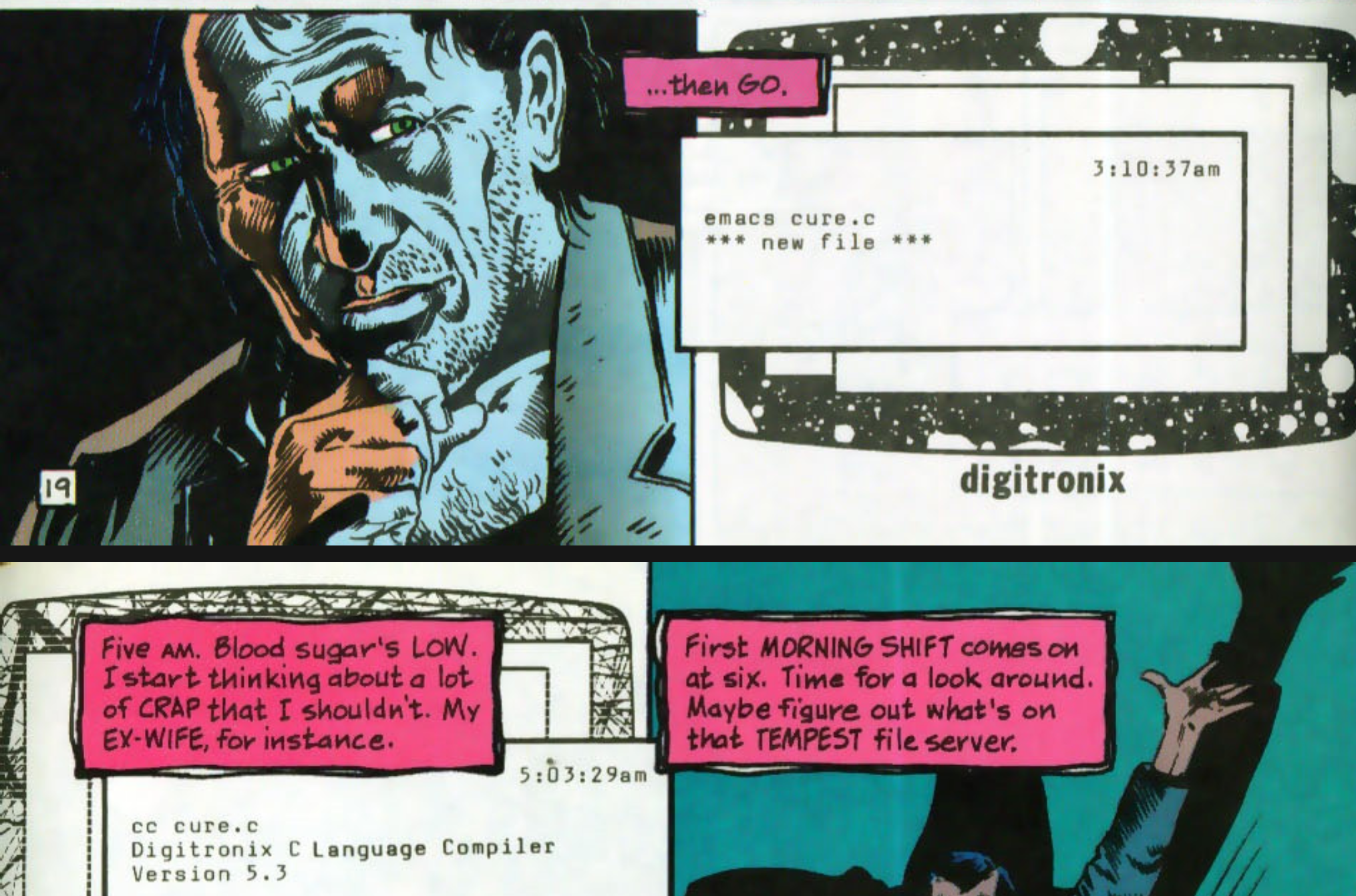 The Hacker Files (1992-1993), Issue #1
2013-2019 Manga series, Ōsama-tachi no Viking (The King’s Viking)
Ōsama-tachi no Viking is a Japanese manga series about a high school hacker teaming up with a wealthy angel investor to reshape the world order.
In one chapter, an enemy hacker uses Emacs Lisp to exploit security cameras (credits to: this Reddit comment).
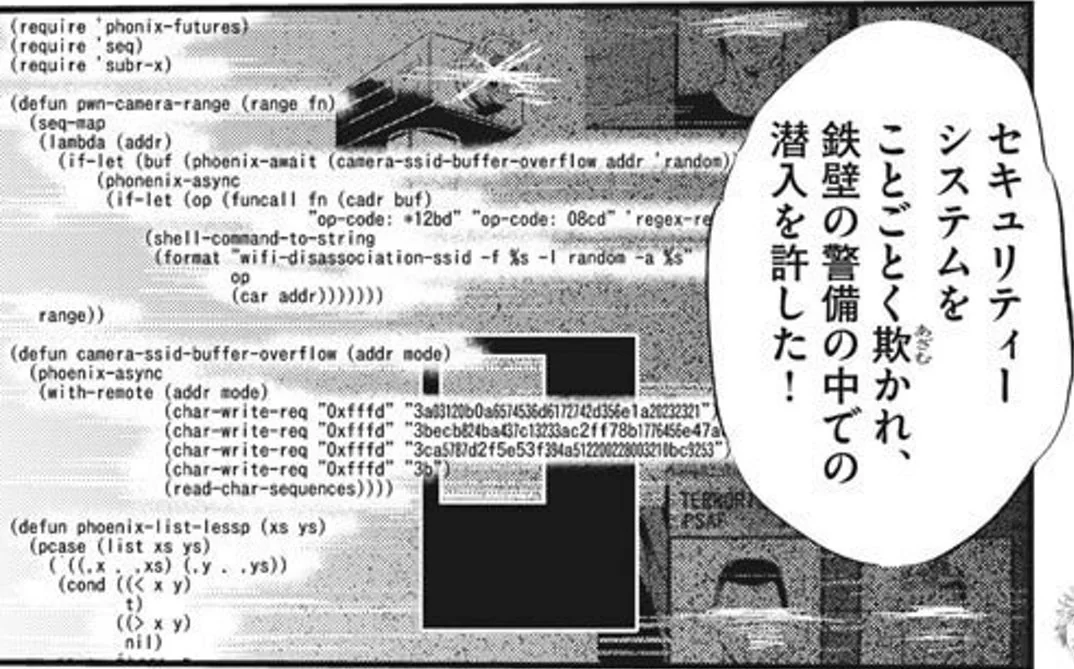 Emacs Lisp sighting in Ōsama-tachi no Viking
The code may look like any generic Lisp variant (yes, the many parentheses give it away), but look closely – pcase and seq-map are Emacs-specific constructs, from pcase.el and seq.el – part of Emacs since 24.1 and 25.1 respectively.
Personally, I prefer mapcar or cl-map to seq-map in my own Emacs Lisp code for slightly better runtime performance, but I suppose a hacking script wouldn’t care about micro-optimizations in the heat of the moment – as long as it does the job!
1994-1996 OVA, Key the Metal Idol
Thank you u/PuercoPop on Reddit for suggesting this entry!
Key the Metal Idol is a Japanese anime series from the 90s. It follows the story of a robotic girl Tokiko “Key” Mima and is a “somewhat dark drama with elements of mecha and sci-fi”.
In episode 9, Return, the mysterious character “D” is locked in a cell with just computer terminal. In a close-up scene, we see D hitting the return key and a scrolling wall of Emacs Lisp shows up on his terminal screen.
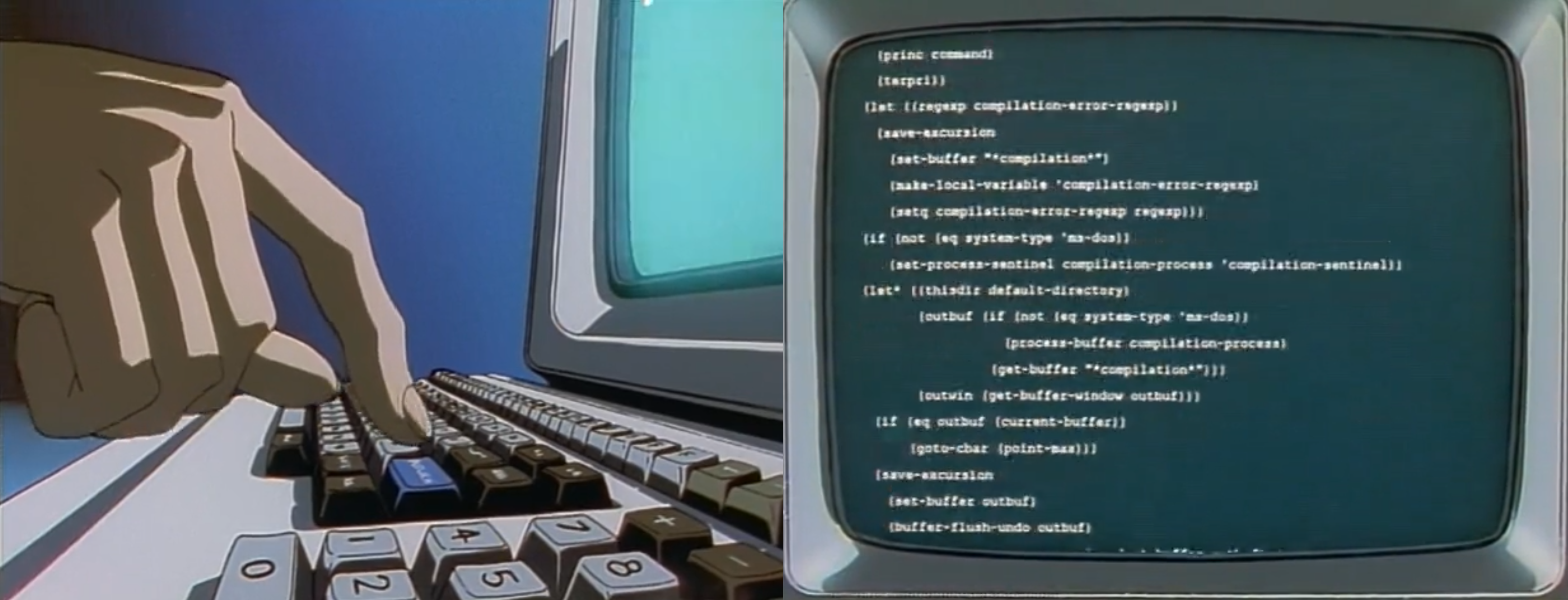 Emacs Lisp sighting in Key the Metal Idol (1994-1996)
There is no mistaking for other Lisp variants, both save-excursion and set-buffer are Emacs Lisp specific keywords.
2013 Movie, The Internship
Thank you u/dagobah1202 on Reddit for suggesting this entry!
The Internship is a comedy film following the story of two 40-year-old salesmen spending the summer competing with other much younger and more technically skilled applicants for a job at Google. Despite its many inaccuracies in depicting real software engineer lifestyle at Google, it’s still an enjoyable lighthearted movie.
In a scene where character Nick Campbell (played by Owen Wilson) tries to impress a Google executive during her presentation, he raised the question, “Why not use Emacs rather than Vi as the default editor for Ubuntu?” To which the executive (played by Rose Byrne) replied, “That’s actually a very good thought, Nick.” Ironically, the scene is largely unrealistic because if those were real programmers sitting next to him, an all-out war would’ve started right then and there (/s).
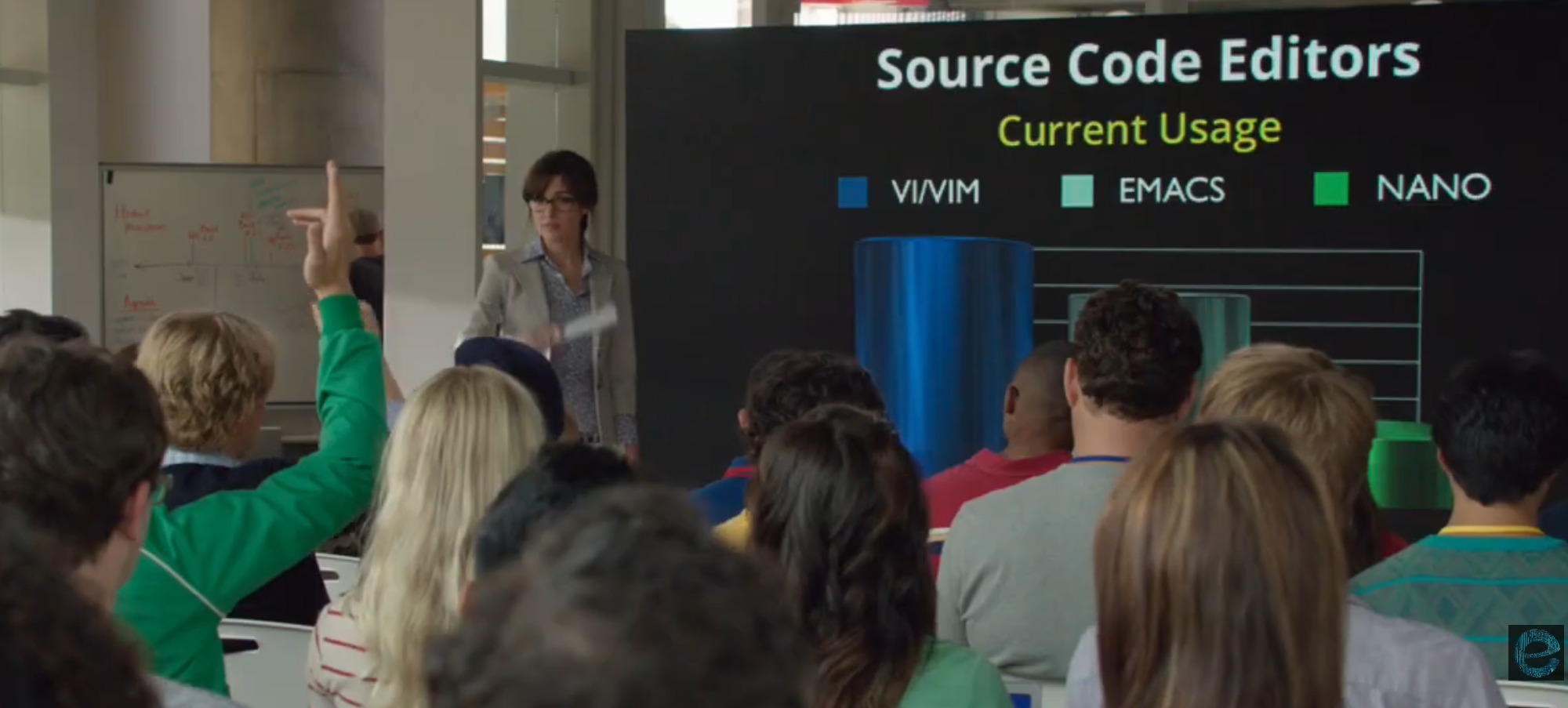 Scene from The Internship (2013). A presentation slide compares the popularity of source code editors
2014-2015 Anime series, Aldnoah.Zero
Thank you Reisen for suggesting this entry via email!
In Episode 5 of Japanese sci-fi anime Aldnoah.Zero, we catch glimpses of both Emacs and Emacs Lisp during a fight between two mechas. Blink and you’d miss it.
Look closely towards the bottom right, our pilot appears to be debugging some issues with their .emacs initialization file. We’ve all declared .emacs bankruptcy at one point so I can certainly relate to the pain. But in the middle of a mecha fight? Now that’s a first.
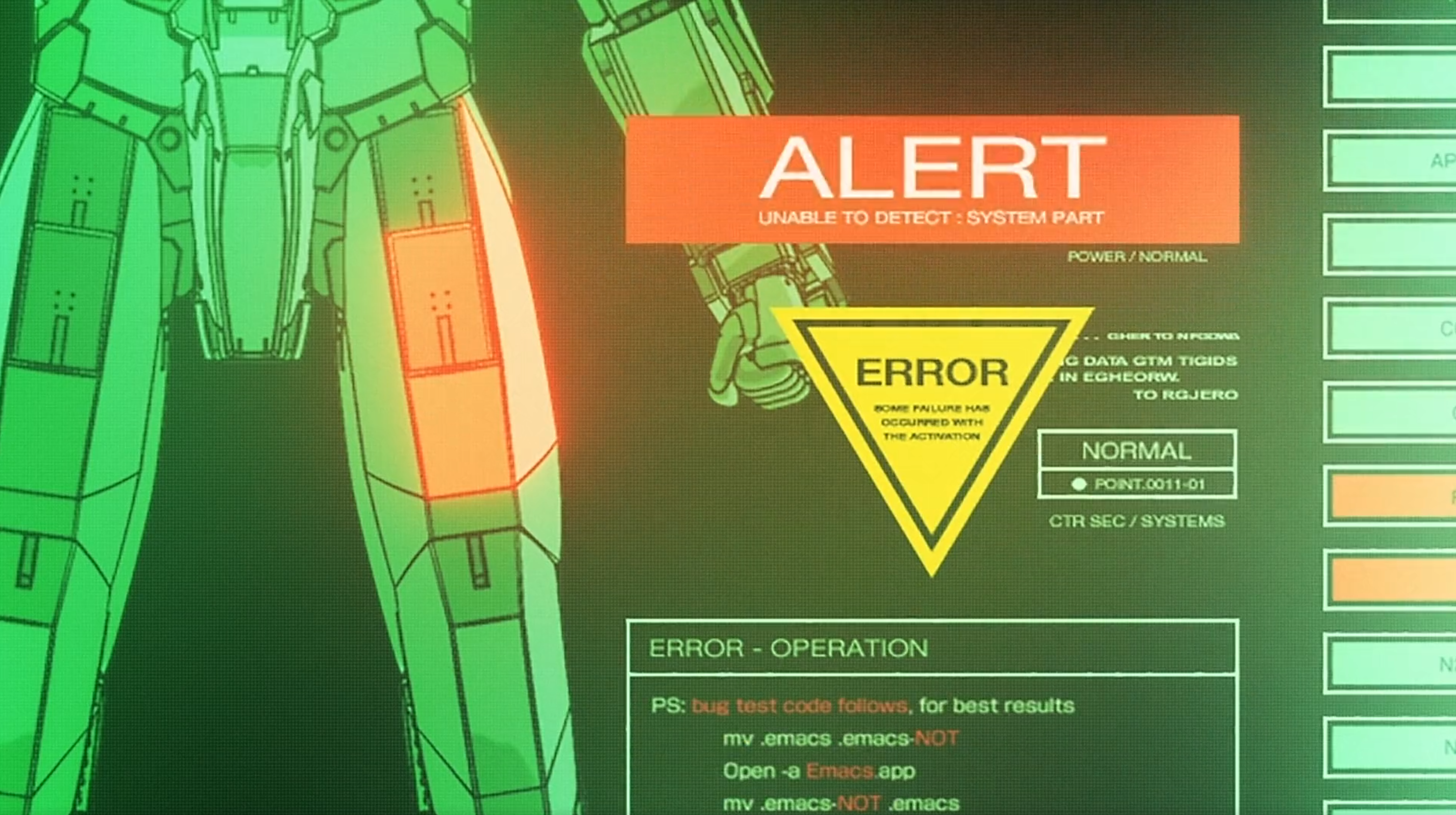 Backing up the .emacs init file to start over is a pain we’ve all gone through at some point
Some random snippets of Emacs Lisp are also shown on screen shortly after. Look closely and you shall recognize keywords like progn, insert, beginning-of-line, and forward-char.
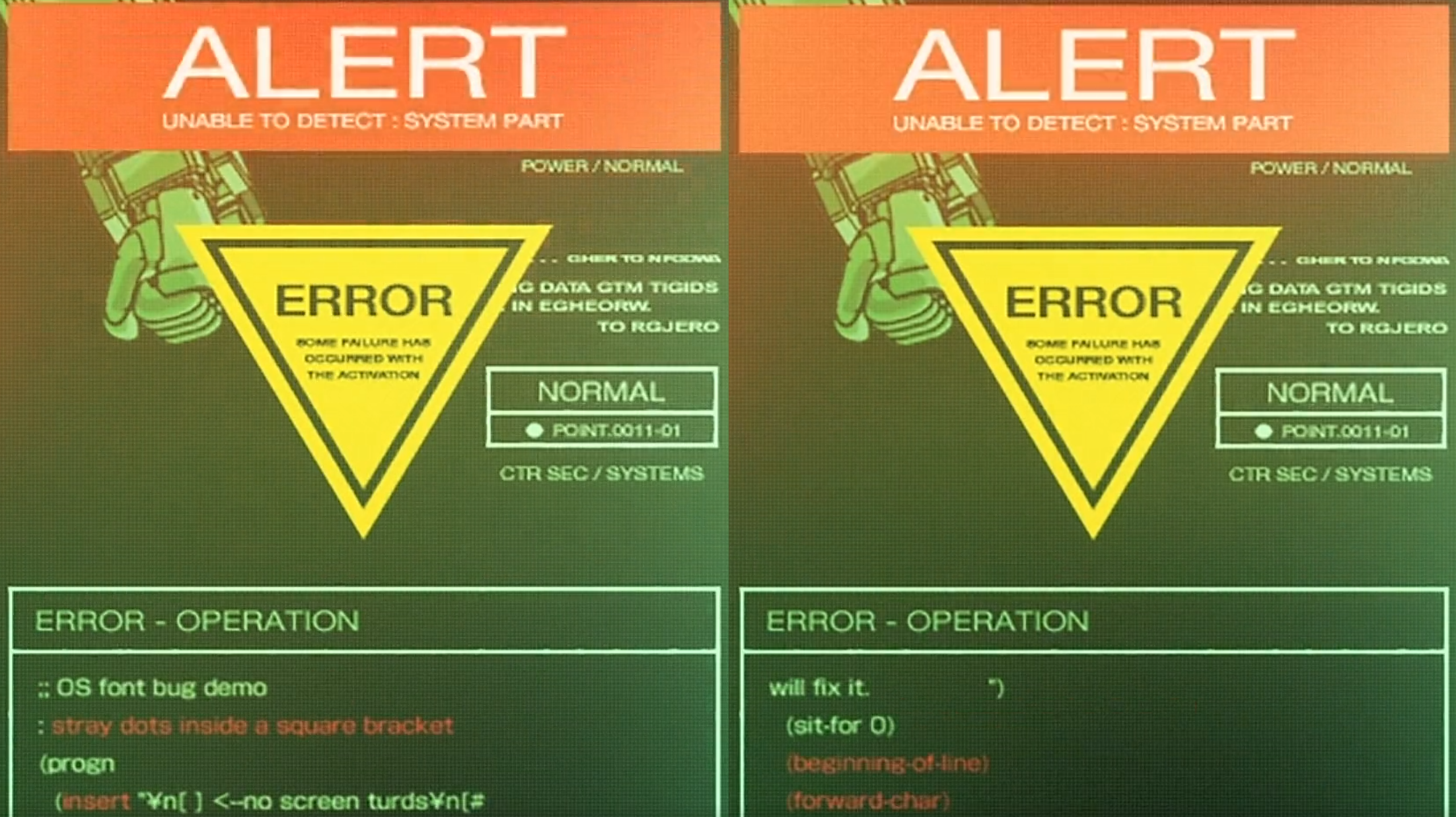 Some random Emacs Lisp shown on screen
2017 Documentary, AlphaGo
Thank you u/_0-__-0_ on Reddit for suggesting this entry!
AlphaGo - The Movie is an award-winning documentary about how AlphaGo, a program developed by Google DeepMind, mastered the game of Go through A.I. (machine learning with convolutional neural networks trained by reinforcement learning), and played against top-ranked Go player Lee Sedol.
During an introductory scene in which the narrator is explaining what “neural networks” mean, the camera shows the Ubuntu desktop of a software engineer programming Lua in Emacs.
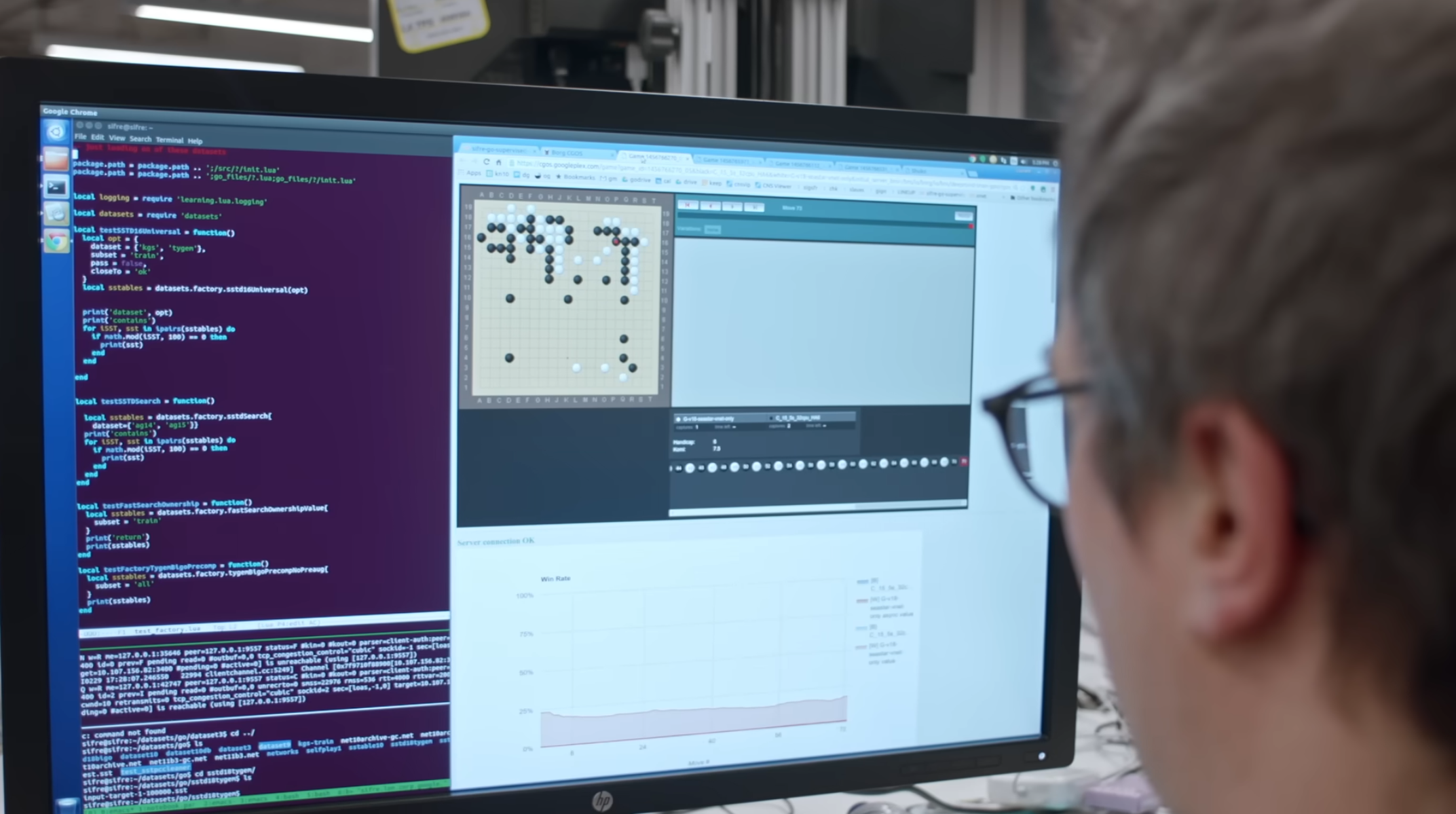 A DeepMind software engineer using TUI Emacs within Tmux, in Gnome Terminal
The engineer appears to be using the default theme in the default terminal app (Gnome Terminal) on Ubuntu, with the default Ubuntu Mono font. He is also using the default dark theme in GNU Emacs, with the background color set to nil, so it falls through to use the terminal purplish background. A minimalist purist at heart indeed.
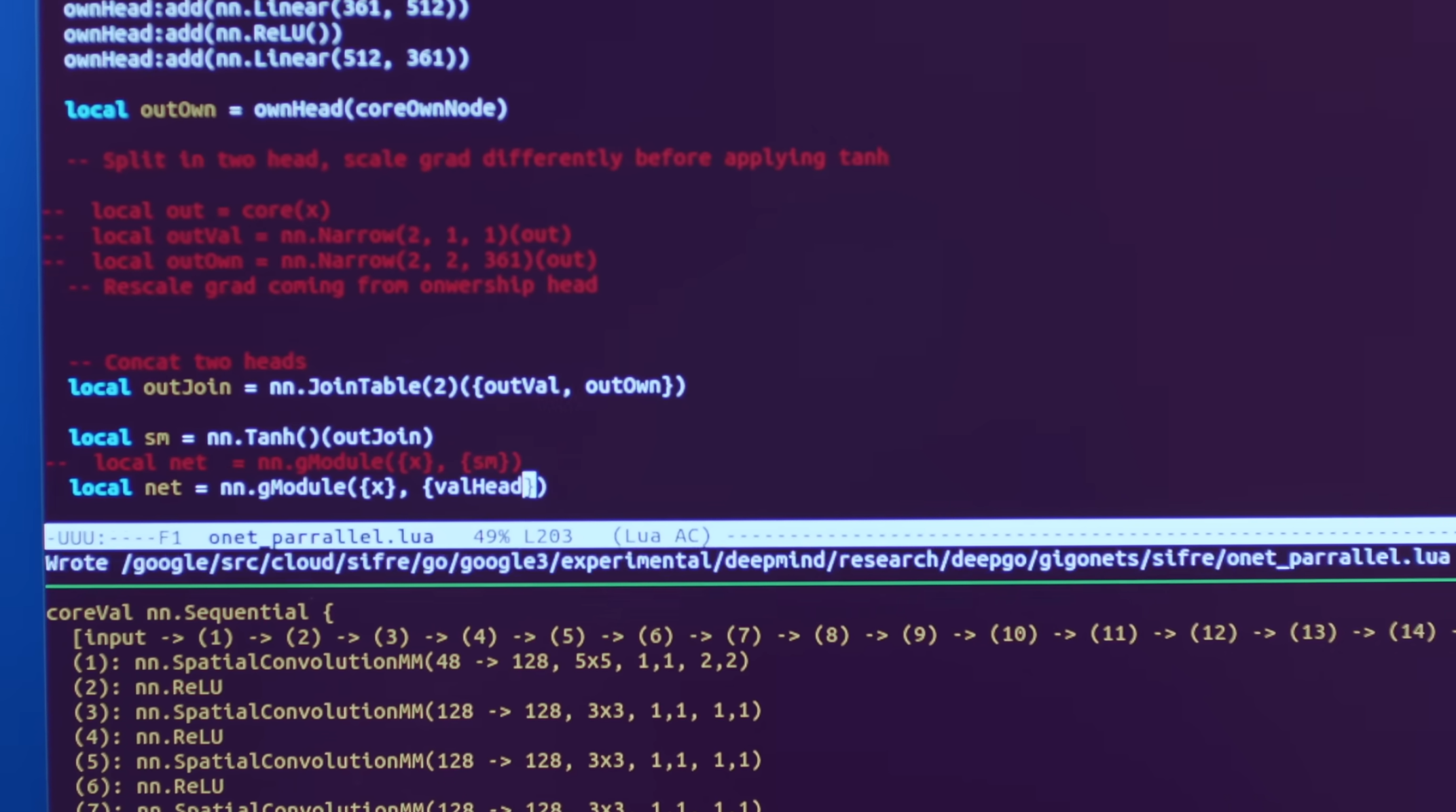 A close-up shot of the programmer writing Lua in GNU Emacs. Looks like there’s a typo in the file name.
2019-2025 Netflix series, How to Sell Drugs Online (Fast)
Thank you u/MiEdCaLe on Reddit for suggesting this entry!
 How to Sell Drugs Online (Fast), Netflix TV series
In Season 2, Episode 1 of this German Netflix series, Kira, an Emacs advocate with elite hacking skills, jokes about Vi having two modes, ‘beeping non-stop’ and ‘breaking everything’. Her date, Lenny, argues back, “Is that so? Emacs is surely much better - until your hands fall off from hitting the shortcuts!” Shortly earning himself a french fry thrown at his face…
Jokes on you, Lenny. I use Emacs with Evil-mode – the best of both worlds!
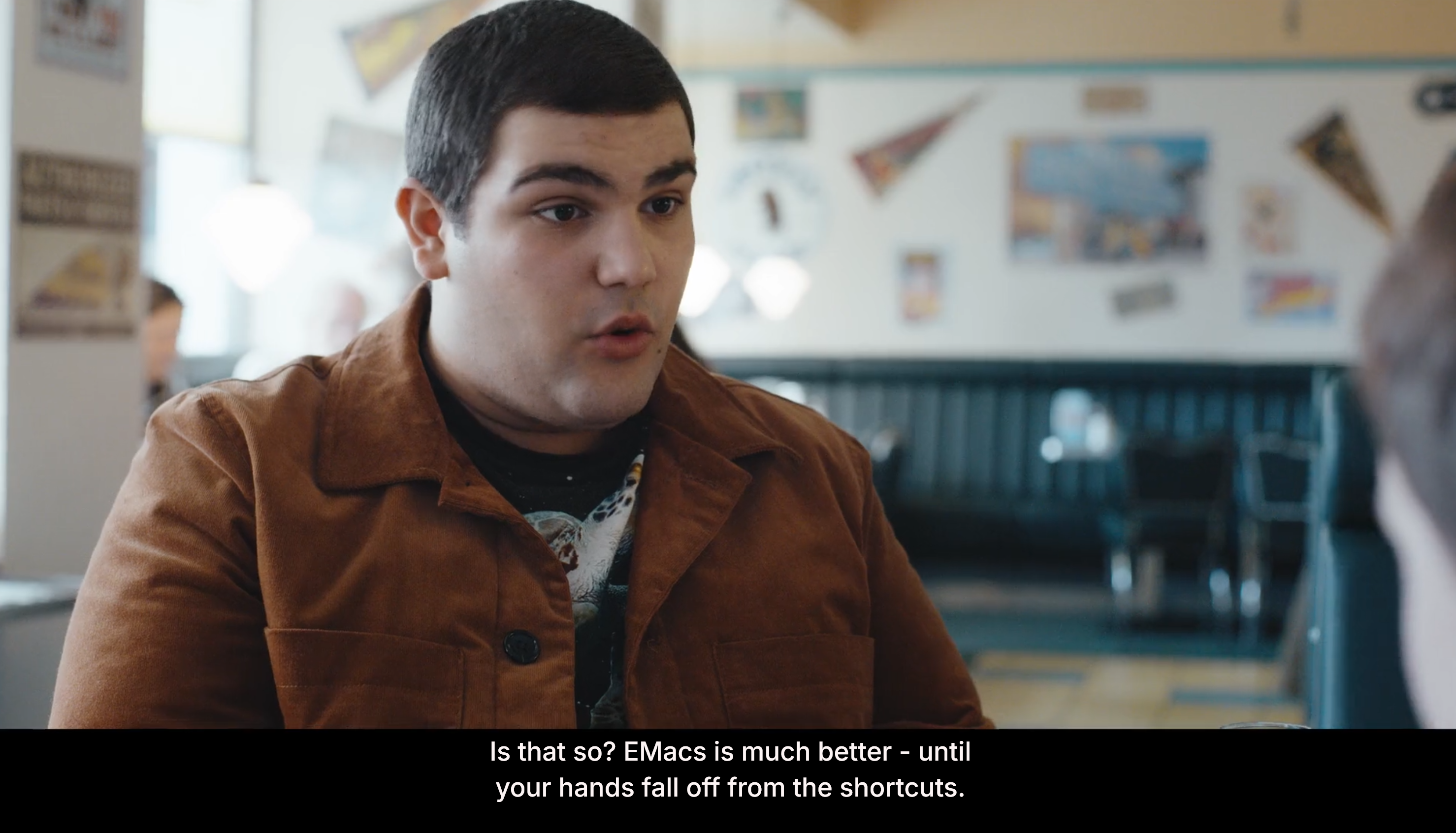 Lenny, a Vi user, pokes fun at Emacs’ nasty default shortcuts
2023 Hulu miniseries, A Murder at the End of the World
Thank you u/xenodium on Reddit for suggesting this entry!
A Murder at the End of the World is a murder mystery / psychological thriller TV miniseries. I am definitely watching this very soon.
In one scene, the main character Darby Hart (played by Emma Corrin) asked a lady out of the blue, “Are you Vi or Emacs?” to see if she’d show a visible reaction and if not, she was probably not a hacker.
 Are you Vi or Emacs?
The GIF above is taken from Xenodium’s blog post https://xenodium.com/are-you-vi-or-emacs. The author Álvaro Ramírez is also the creator behind the YouTube playlist Bending Emacs.
2002 Polish movie, Haker (Hacker)
Thank you u/Esnos24 on Reddit for suggesting this entry!
Haker is a Polish comedy film that follows the story of two high school friends sharing the passion of hacking and getting themselves in trouble with some real gangsters.
In a scene where one of them is having difficulty breaking through a firewall, the other suggested, “Have you tried Emacs through sendmail?” Now maybe my hacking skills are too amateur for these two, but I’m not quite sure what that dialogue is supposed to mean. Emacs surely can send mail via sendmail, but that’s just… sending an email, not some firewall penetration technique. Historically speaking, sendmail does have a reputation of being vulnerable, perhaps the writer was referring to this. It’s also possible that the English subtitles didn’t do the best job translating the original Polish dialogue.
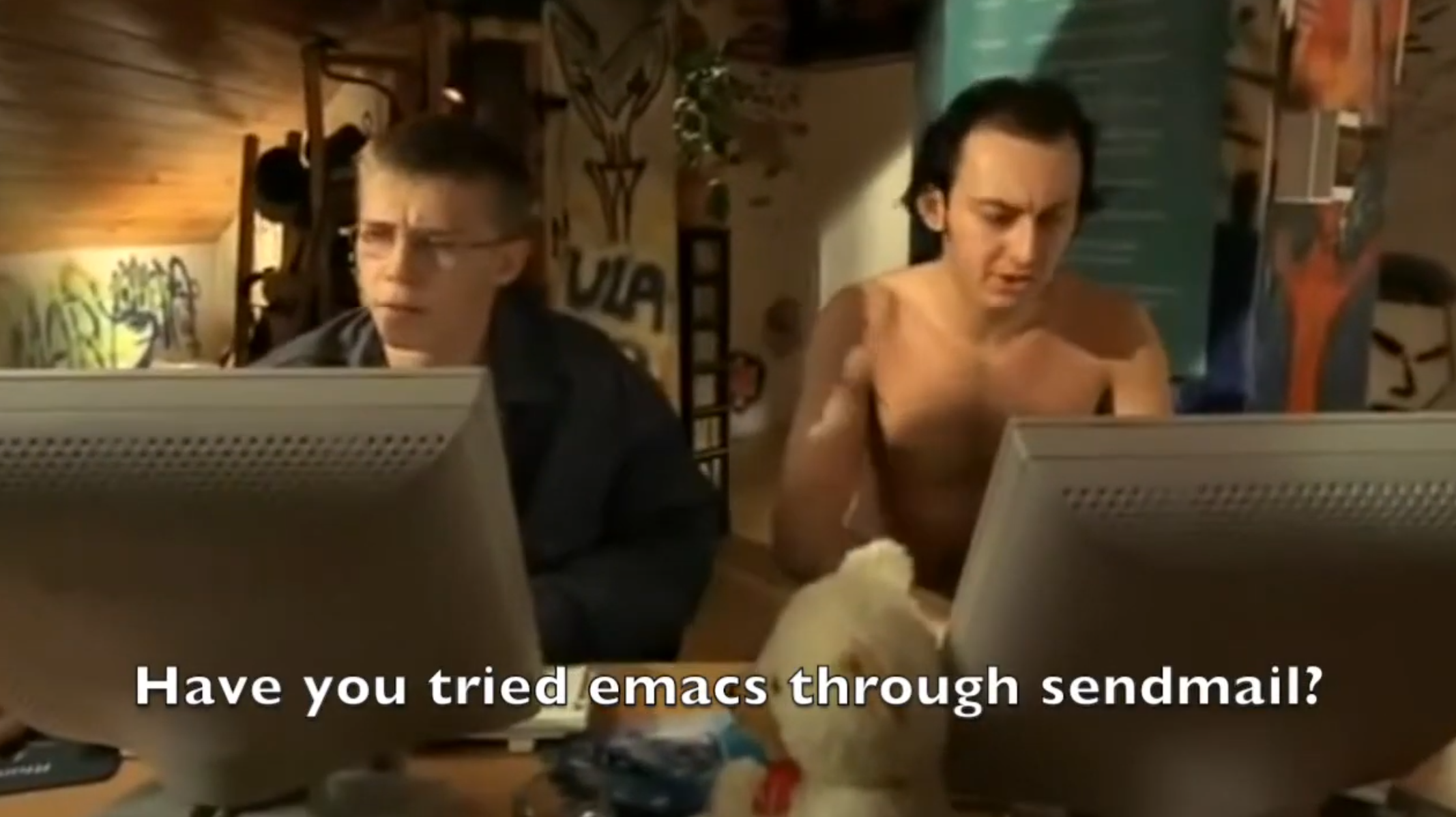 Have you tried Emacs through sendmail?
P.S. As far-fetched as “hacking through Emacs and mail” sounds, there’s some real history behind it. See The Cuckoo’s Egg in the Honorable mentions below. Maybe the writers weren’t so far off after all.
Honorable mentions
A few honorable mentions – textual references and other nods that aren’t on-screen sightings, but are too good to leave out:
xkcd #378, Real Programmers – the famous strip where “real programmers use butterflies” to flip disk bits, capped by the line “‘Course, there’s an Emacs command to do that… good ol’
C-x M-c M-butterfly.” Emacs later added a realM-x butterflycommand as an easter egg nodding to this very comic. The origin of M-x butterfly
Clifford Stoll, The Cuckoo’s Egg (1989) – Stoll’s first-hand account of hunting down a hacker who had broken into Lawrence Berkeley Lab. The hacker acquired superuser access by exploiting a security hole in GNU Emacs’
movemailfunction, which ran with root privileges and could be tricked into overwriting protected system files. (Thank you to multiple people who suggested this entry on Reddit, Hacker News, and via email.)Neal Stephenson, In the Beginning… Was the Command Line (1999) – the sci-fi novelist devotes a loving passage to Emacs, calling it “a thermonuclear word processor” and “outshines all other editing software in approximately the same way that the noonday sun does the stars”.
Neal Stephenson, Cryptonomicon (1999) – in the novel, character Randy Waterhouse uses Ordoemacs, a modified version of Emacs that encrypts every file before writing it to disk. (Thank you ‘dleslie’ on Hacker News for suggesting this entry.)
And here is a list of famous Emacs users, curated by Xah Lee. Notably:
- Donald Knuth (Turing Award winner; father of analysis of algorithms)
- Guido van Rossum (creator of Python)
- Yukihiro Matsumoto (creator of Ruby)
- Simon Peyton Jones (creator of Haskell)
- Jeff Dean (Google’s Chief Scientist, leading Google AI, Google DeepMind, and Google Research)
- Jonathan Blow (game developer; creator of Jai programming language)
- Julian Assange (founder of WikiLeaks)
- Linus Torvalds (creator of Linux; technically uses micro-emacs, not GNU Emacs)
- etc.
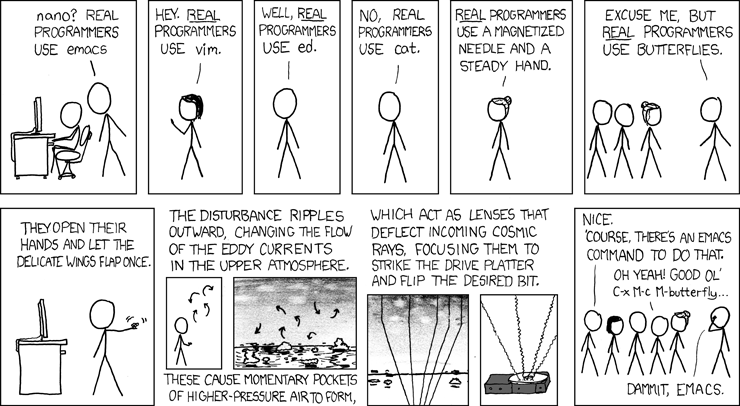 The origin of M-x butterfly
That’s it for today, hope you enjoyed the post as much as I did writing it! If you know of a reference that I left out, please don’t hesitate to send me an email at ian.pan@columbia.edu.
References
- https://medium.com/h0llyw00d-h4x0rs/the-social-network-6591ec03443d
- https://www.youtube.com/watch?v=KdtPNRzuKrk
- https://www.reddit.com/r/emacs/comments/ged5p/emacs_in_tron_legacy_three_images/
- https://www.reddit.com/r/emacs/comments/1bcxyps/spotted_emacs_in_a_comic_emacs_cultural/
- https://www.youtube.com/watch?v=Qeh3E67brBs
- https://www.handsonprogramming.io/blog/2024/02/emacsintron
- https://www.reddit.com/r/emacs/comments/1bcxyps/comment/kvk33df/?utm_source=share&utm_medium=web3x&utm_name=web3xcss&utm_term=1&utm_content=share_button
- https://www.imdb.com/title/tt5218484/
- https://www.youtube.com/watch?v=V7PLxL8jIl8
- https://web.stanford.edu/class/cs81n/command.txt
- http://xahlee.info/emacs/misc/famous_emacs_users.html
- https://www.reddit.com/r/emacs/comments/11kqgav/emacs_lisp_cameo_in_anime_series_key_the_metal/
- https://xenodium.com/are-you-vi-or-emacs
- https://www.tumblr.com/moviecode/76927836921/from-key-the-metal-idol-episode-9-the-code-shown
- https://www.youtube.com/watch?v=lpdngXQOkBI
- https://www.forbes.com/sites/quora/2013/06/13/what-do-googlers-think-of-the-internship-movie/
- https://www.youtube.com/watch?v=wsA7N5wmre8
- https://www.reddit.com/r/emacs/comments/glvb68/meme_when_you_see_emacs_on_tv/
- https://www.youtube.com/watch?v=WXuK6gekU1Y
- https://www.tumblr.com/moviecode/75563286489/movie-arctic-blast-they-are-reconstructing-a
- https://www.emacswiki.org/emacs/xml-parse.el
- https://dev.to/hyenast2/neal-stephenson-s-cryptonomicon-and-ordoemacs-4g4c
- https://news.ycombinator.com/item?id=48502286